Research
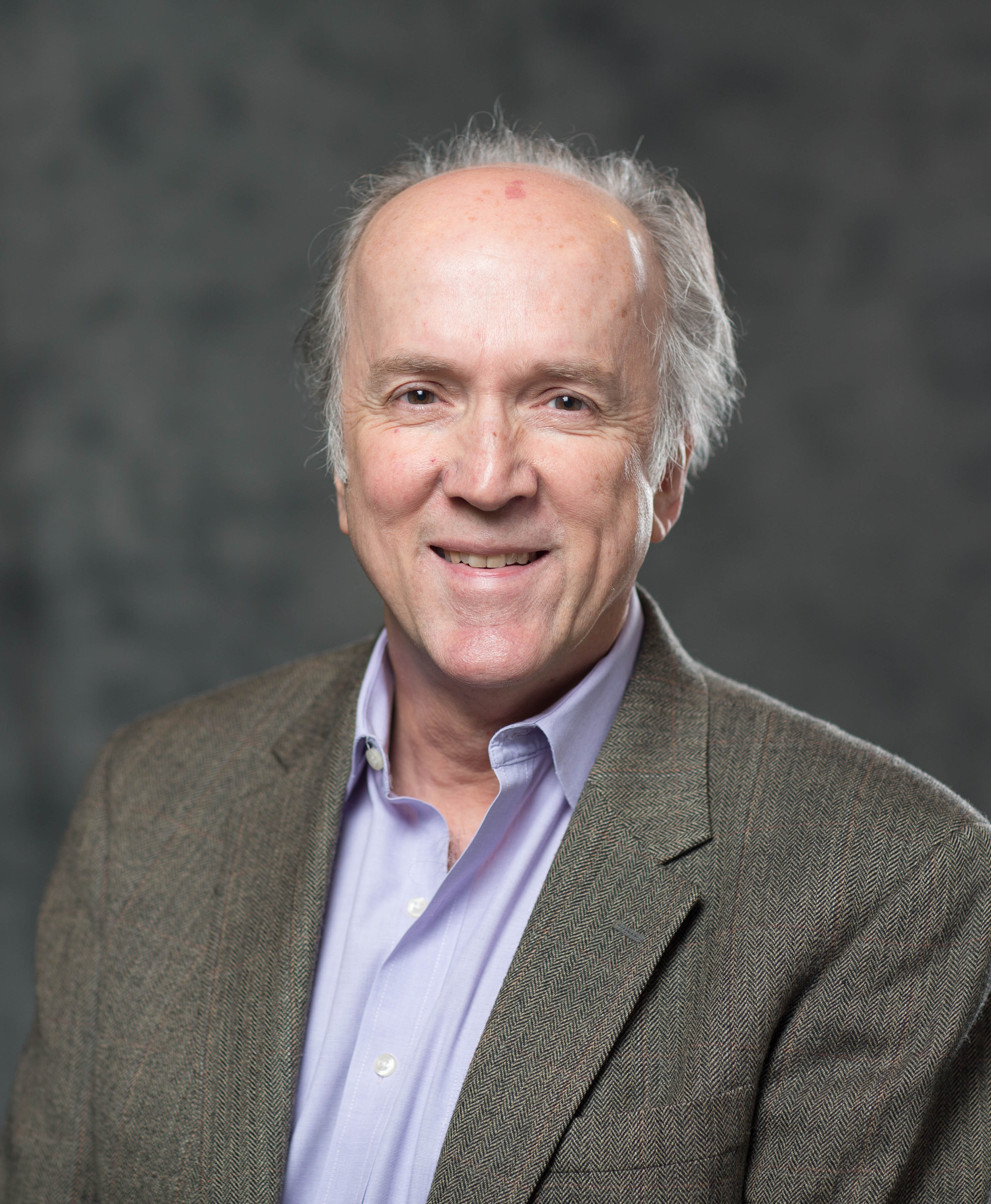
My research interests are time dependent. The reason is that I like mathematics, and I like to use mathematics to understand the world we live in (i.e., I am an applied mathematician). Here are a few of the research topics for my more recent PhD students (in reverse chronological order):
 Northern Lights. The problem for the aurora involves solving an electron transport equation in the upper atmosphere that is coupled to the kinetic model for light emission due to scattering. The transport equation was solved using an eigenvalue decomposition method that allows for the accurate resolution of the rather extreme boundary layer near the Earth's surface. When coupled with the light-emission model, this method made it possible to accurately predict the red, green, and blue light observed in an aurora..
Model and Analysis for the Onset and Progression of Parkinson's Disease. Parkinson's disease (PD) is associated with abnormally synchronized oscillations in the beta (~20 Hz) frequency band in the basal ganglia. Developing a quantitative understanding of PD involves one of the major challenges in theoretical neurobiology, which is to be able to characterize the dynamic interactions in a complex and distributed network model of neural circuits. Using a mean-field firing-rate model, it was shown how the interactions among the neuronal groups change from a steady-state response in the healthy state to limit-cycle behavior as the disease progresses.
Nonlinear Amplification in the Cochlea. A fundamental open question in understanding how we hear concerns the role of a nonlinear feedback mechanism known as the cochlear amplifier. In this project, a nonlinear three-dimensional continuum model for the amplification of a wave in the cochlea was analyzed. This involved using a nonlinear WKB approximation, and a hybrid numerical scheme, to show that the model is capable of reproducing some of the more well-known effects of the amplifier.
Sleep-Wake Cycle. The goal of this research project is to derive and then analyze a physiologically based model of the human sleep-wake cycle. The approach is to use the known properties of the neurotransmitters associated with wake and sleep, and the regions of the brain in which they function, to derive the model. This approach also incorporates or accounts for the states of sleep (REM and NREM) and the mechanisms that regulate it (homeostatic drive and circadian synchronization).
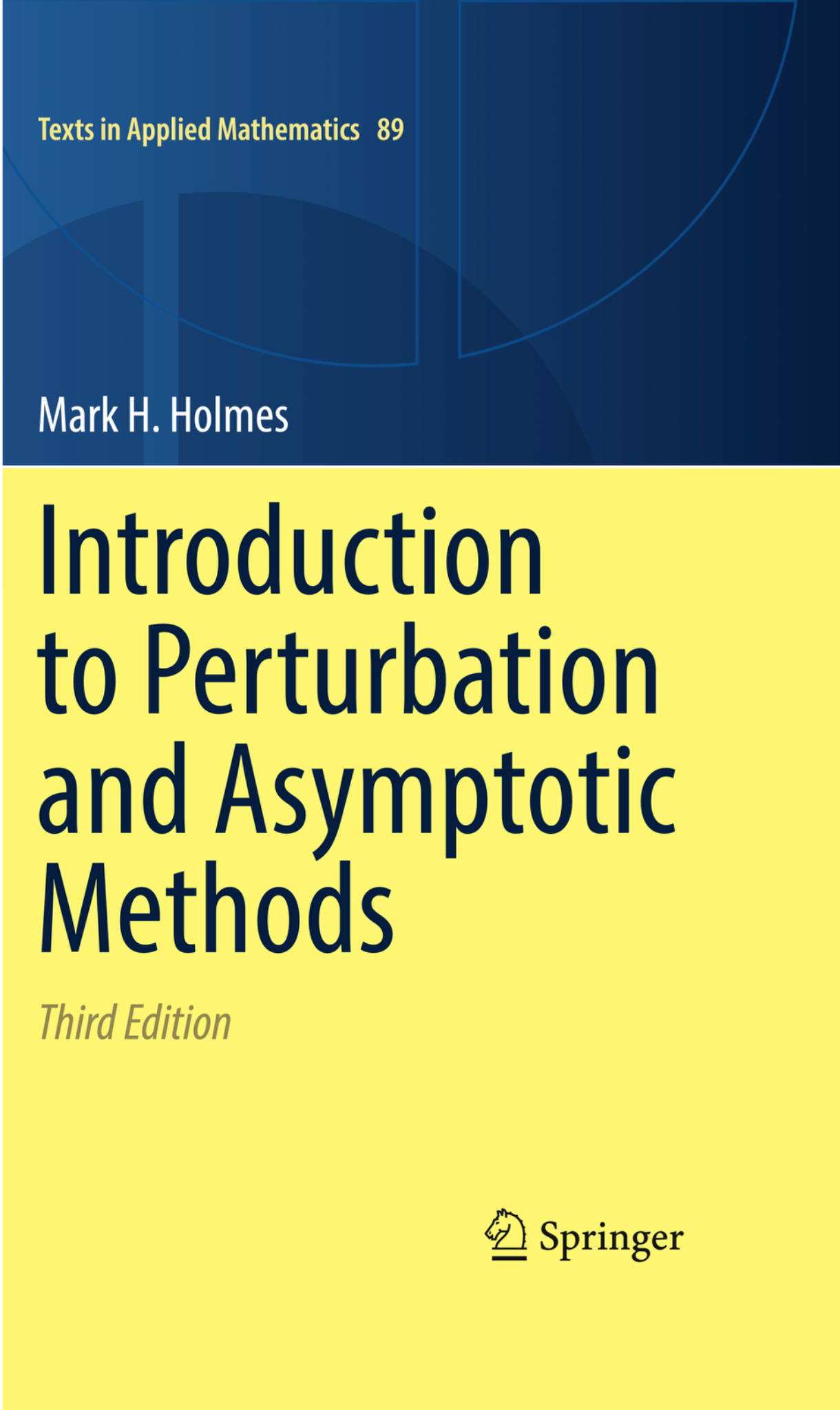
Books


A Few Awards
Guggenheim Fellow
Y.C. Fung Young Investigator Award (ASME)
2000 Premier Award for Excellence in Engineering Education Courseware
2001 ASME Curriculum Innovation Award
2002 Award for Innovative Excellence in Teaching, Learning and Technology
2007 ICTCM Award for Excellence and Innovation with the Use of Technology in Collegiate Mathematics
2007 Rensselaer Trustee's Outstanding Teacher Award
Larger Grants (as Project Director)
"RTG: Research Training in Applied Mathematics," with G. Kovacic, P. Kramer, F. Li, Y. Lvov, and D. Schwendeman, $2,099,878, National Science Foundation. Summary. [inactive]
"GAANN: Graduate Assistance in Areas of National Need," with I. Herron, G. Kovacic, F. Li, and D. Schwendeman, $1,330,000, Department of Education. [inactive]
"RTG: Research Training Group in Large-Scale Nonlinear Systems," with G. Kovacic, P. Kramer, F. Li, Y. Lvov, and V. Roytburd, $1,272,000, National Science Foundation. Summary for first three years of grant. [inactive]
"CSUMS: Computational Science Training in the Mathematical Sciences at Rensselaer," with I. Herron, G. Kovacic, P. Kramer, and V. Roytburd, $1,251,000, National Science Foundation. Summary for first three years of grant. [inactive]
"Initiative for Vertical Integration of Research and Education in Applied Mathematics," with J. Flaherty, G. Kovacic, J. McLaughlin, and D. Schwendeman, $3,830,000, National Science Foundation. Summary for last two years of grant. [inactive]
"Mathematics and its Applications in Engineering and Science: Building the Links," with W. Boyce, R. Spilker, K. Conner, and J. Wilson, $4,016,000, National Science Foundation. [inactive]
Some Recent Research Papers (from 2018 on)
"A model and analysis for the nonlinear amplification of waves in the cochlea," with K. Fessel. Mathematical Biosciences
"Invariance properties for the error function used for multilinear regression," with M. Caiola. PLOS ONE
"Numerical solution of the electron transport equation in the upper atmosphere," with M. Woods and W. Sailor. Journal of Computational Physics
"Model and Analysis for the Onset of Parkinsonian Firing Patterns in a Simplified Basal Ganglia," with M. Caiola. International Journal of Neural Systems
"Conservative numerical methods for nonlinear oscillators," American Journal of Physics
"Empirical Analysis of Phase-Amplitude Coupling Approaches," with M. Caiola, T. Wichmann, and A. Devergnas, PLOS ONE
Course Materials
 Numerical Computing Fall '19
- Evaluations for F19
- Evaluations for S18
- Evaluations for S14
- Evaluations for S13
Art and Science of Mathematics Fall '19
Numerical Linear Algebra with Applications Spring '21
- Evaluations for S19
- Evaluations for S17
Foundations of Applied Mathematics Fall '18
- Evaluations for F18
- Evaluations for F17
- Evaluations for F14
- Evaluations for F12
Calculus II Fall '16
- Evaluations for F16
- Evaluations for F14
Introduction to Differential Equations
- Evaluations for Summer '18
- Evaluations for S16
Mathematics in Medicine and Biology Fall '15
- Evaluations for F15
- Evaluations for F13
- Evaluations for F11
Perturbation Methods Spring '12
- Evaluations for S12
Intro to Topology Fall '10
Intro to Math Research Spring '09
Intro to the Numerical Solutions of Differential Equations Spring '05
Miscellaneous
Reason for Nobel Prizes?
Reason for above observation?
Addresses, etc
Mailing Address:
Prof. Mark HolmesDepartment of Mathematical Sciences
Rensselaer Polytechnic Institute
110 8th Street, Troy, NY 12180
Office: Amos Eaton 322
E-mail: holmes (@rpi.edu)
Some RPI Pages
Course Notes of Ashwani Kapila